How to Build a Content Pillar Strategy for Instagram, Facebook and Threads
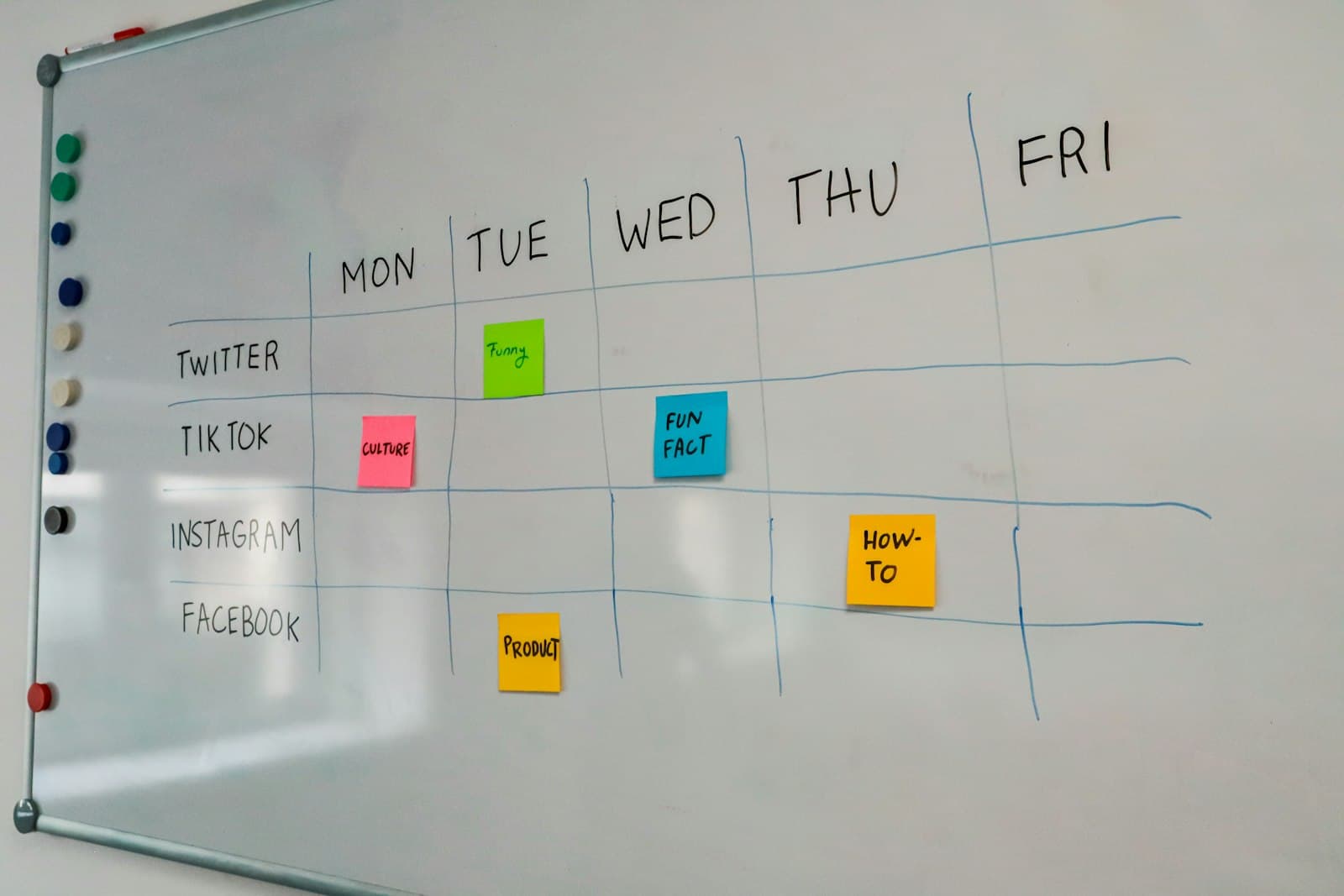
Post enough content without a structure behind it, and two things happen: your audience never quite knows what to expect from you, and the algorithm can't figure out what to categorize your account as — which means it doesn't know who to show you to. Content pillars fix both problems at once.
What a content pillar actually is
A content pillar is one of 3-5 non-negotiable themes that every piece of content you publish has to fit into. Not a content calendar, not a list of ideas — a small, fixed set of categories that define what your account is actually about. Four pillars that show up reliably across brands that do this well:
- Education/Tutorial — teaching the audience how to solve a specific problem
- Contrarian/Belief — challenging an industry standard to position yourself as the authority
- Inspiration/Proof — testimonials, case studies, before-and-afters
- Product-Centric — a soft-sell showcase of what you actually offer
Every post you publish should map cleanly to one of these. If it doesn't fit any of them, that's a sign either your pillars are too narrow, or the post doesn't belong on this account.
Why this actually changes algorithmic distribution
This isn't just an organizational nicety — committing to a fixed set of pillars creates a recognizable identity that the algorithm can categorize accurately. An account that jumps between unrelated topics sends confusing signals about who to show it to; an account with consistent pillars gets matched more reliably to the audience actually interested in that specific mix of topics, which compounds every time you post.
Running one pillar system across three different platforms
The same four pillars can — and should — power Instagram, Facebook, and Threads at once, but the execution changes by platform:
Instagram is visual-first: Reels and Carousels are where your Education and Inspiration pillars do the most work, since the Reels algorithm rewards content built to be watched and re-watched.
Threads is text-first: the same educational point that took a 30-second Reel on Instagram becomes a multi-post thread here, where a bold Contrarian hook in the first post carries more weight than any visual could.
Facebook is increasingly the retargeting layer more than the discovery layer — Facebook is where your Product-Centric pillar shows up most, often as a Meta Ads retargeting campaign built from your best-performing Instagram and Threads content, rather than as fresh organic posts.
Repurposing one idea across all three
The efficient version of this system doesn't mean creating three times the content — it means taking one core idea and adapting its format per platform. A single "common mistake" insight becomes an Instagram Carousel breaking down the mistake step by step, a Threads post arguing the contrarian case in five connected posts, and eventually a Facebook retargeting ad once the organic version proves it resonates. One idea, three formats, one consistent voice underneath all of it.
For the full system — content pillars, funnel structure, and how it all ties into Meta Ads — see The Omni-Channel Social Media Blueprint. And since the same principle of platform-specific execution applies well beyond Meta's own platforms, our Pinterest SEO guide covers what a fourth, very different platform needs from your content strategy.
This post is part of our full social media marketing strategy guide.
Build this with
 E-books
Threads Velocity – Threads Growth, Engagement & Meta Ads Strategy Guide
$50$29.99 E-books
The Pinterest Traffic Vortex – Pinterest SEO, Ads & Automation Guide with Make and n8n
$50$29.99 E-books
The Omni-Channel Social Media Blueprint
$50$29.99More from the lab
View all posts → Guides
How to Turn Threads Followers Into Email Subscribers and Leads
Followers are a vanity metric until they convert into something durable. Here's the free-resource-to-landing-page pipeline that turns Threads conversation into an email list.
 Guides
The Educate-Agitate-Architect Framework for Threads Content
A three-stage content system for Threads that sells through storytelling instead of promotion — with the 70/20/10 content mix ratio behind it.
 Guides
Social Media Marketing Strategy: How to Run Organic and Paid as One System
Why organic and paid social media aren't competing tactics — how to split your budget, measure ROAS, and run Instagram, Facebook, Threads and Pinterest as one connected system.